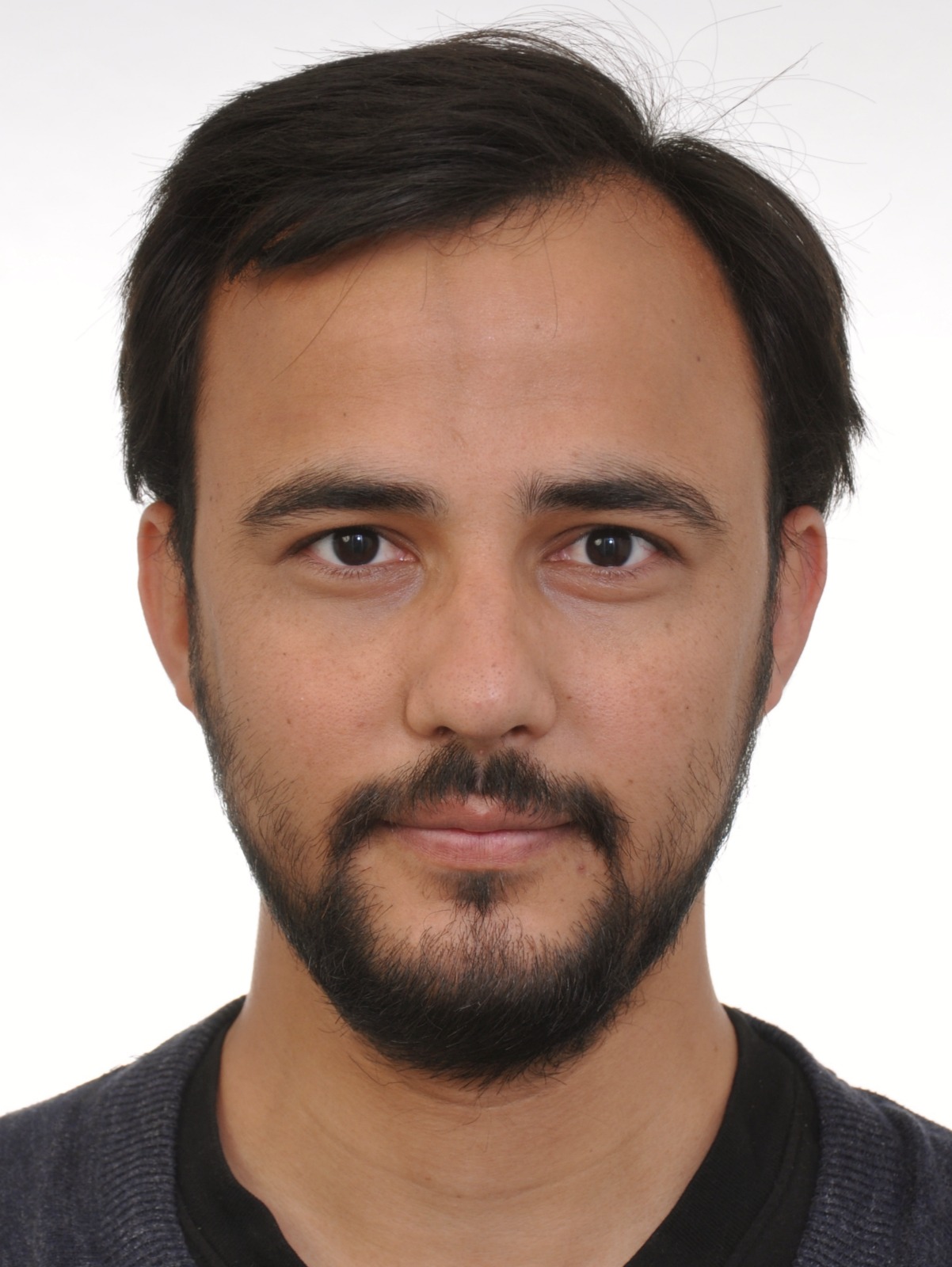
Dr. Ghufran completed his PhD in Computer Science at Institut Polytechnique de Paris, France, with his doctoral research conducted at Inria. His PhD thesis focused on Scalable Analytics on Multi-Streams Dynamic Graphs. His research addressed graph database systems, dynamic graph processing, efficient storage structures, indexing, concurrent updates, and analytical and transactional workloads.
During his doctoral research at Inria, he worked on the design and development of efficient database techniques for continuously evolving graph data. His work included the development of an in-memory graph storage engine in C++, optimized mechanisms for transactional and analytical processing, indexing structures for graph snapshots and historical queries, and native techniques for handling out-of-order updates in dynamic graph databases. This research resulted in publications at internationally recognized database venues, including VLDB (A* Journal) and ACM SIGMOD (A* conference).
Prior to his PhD, he worked as a Research Associate at the Center for Information Services and High Performance Computing (ZIH), TU Dresden, Germany. At TU Dresden, he contributed to the AI4DI project, where his work involved machine learning and deep-learning methods for sensor data analysis. In particular, he worked on feature-selection techniques and predictive models for data generated from artificial robotic skins, with the objective of determining the position and intensity of touch events.
He earned his MS in Computer Engineering from Ghulam Ishaq Khan Institute of Engineering Sciences and Technology (GIKI). His MS research focused on efficient algorithms for approximate pattern matching in graphs. For his outstanding academic performance, he was awarded the Academic Gold Medal in the Engineering Category at GIKI.
He completed his Bachelor of Science in Computer Science from COMSATS University Islamabad (Attock Campus), where he was also awarded an Academic Gold Medal.
Selected Publications:
[1]. Angelos Christos Anadiotis, Muhammad Ghufran Khan, and Ioana Manolescu. “Growing Up HAL: Historic and Property Graph Queries”. In: VLDB 2025 Workshop: LSGDA. Muhammad Ghufran Khan is the primary author; authors listed alphabetically.
-
[2]. Angelos Anadiotis, Muhammad Ghufran Khan, and Ioana Manolescu. “Catching up
with Disorder: Dynamic Graphs with Out-of-Order Updates”. In: Proceedings of the
ACM SIGMOD International Conference on Management of Data (SIGMOD). Muhammad
Ghufran Khan is the primary author; authors listed alphabetically. June 2025,
- 15–18.
[3]. Angelos Christos Anadiotis, Muhammad Ghufran Khan, and Ioana Manolescu. “Dynamic Graph Databases with Out-of-order Updates”. In: International Conference on
Very Large Data Bases (VLDB) (2024). Muhammad Ghufran Khan is the primary author;
authors listed alphabetically.
[4]. Zahid Halim, Omer Ali, and Ghufran Khan. “On the efficient representation of datasets
as graphs to mine maximal frequent itemsets”. In: IEEE transactions on knowledge
and data engineering (TKDE) (2019).
[5]. Angelos Anadiotis, Muhammad Ghufran Khan, and Ioana Manolescu. “Scalable Analytics on Multi-Streams Dynamic Graphs”. In: BDA 2023: 39th Conference on Data
Management – Principles, Technologies and Applications (2023).
[6]. Muhammad Ghufran Khan, Zahid Halim, and Abdul Rauf Baig. “An efficient approach
for faster matching of approximate patterns in graphs”. In: Knowledge-Based Systems
276 (2023).
[7] Pawel Kostka, Anja Winkler, Adnan Haidar, Muhammad Ghufran Khan, Rene
J.kel, Ralph Müller-Pfefferkorn, and Peter Winkler. “Touch identification on sensitive
robot skin using time domain reflectometry and machine learning methods”.
In: Artificial Intelligence for Digitising Industry Applications Book Chapter 3.4 2021
(2021).