SDG 3: Good Health and Well-Being

Home > SDG 3: Good Health and Well-Being

Introduction:

At Ghulam Ishaq Khan Institute (GIKI), the commitment to Sustainable Development Goal 3: Good Health and Well-Being is reflected through a diverse range of health-oriented programs and partnerships. From pioneering workshops on artificial intelligence in healthcare to mental health counseling services and breast cancer awareness campaigns, GIKI integrates innovation, education, and community care to promote holistic well-being. Initiatives such as the UNDP-supported Wellness Center, AI-driven diagnostic research, and peer-led public health seminars highlight how the institute leverages its academic strengths and social responsibility to ensure healthy lives, build resilient health systems, and support all members of its community in line with SDG 3.

Healthcare Initiatives and Activities:

Blood Donation Campy by Project Topi

On 11th February 2025, Project Topi organized a Blood Donation Camp in collaboration with the Department of Student Affairs. The initiative encouraged students and faculty to donate blood, contributing directly to saving lives and supporting healthcare facilities.

The blood donation camp organized by Project Topi at GIKI serves as a vital initiative aimed at supporting healthcare systems and ensuring the availability of safe blood for patients in need. This camp brought the GIKI community together to contribute to a lifesaving cause, playing a crucial role in assisting accident victims, surgery patients, and individuals battling serious or life-threatening illnesses. By providing a structured and accessible environment for voluntary blood donation, the camp helped maintain essential blood supplies, strengthened emergency response capabilities, and promoted awareness about the importance of regular donation.

This initiative aligns directly with Sustainable Development Goal 3: Good Health and Well-Being, as it enhances access to quality healthcare, fosters healthier communities, and ensures that lifesaving resources are available when needed most. Through this collective effort, Project Topi continues to contribute to a more resilient, compassionate, and health-focused society.

https://www.facebook.com/photo/?fbid=1086407246866894&set=a.573649784809312

Open Donations for Medical Support by Project Topi

Project Topi successfully organized an open donation drive to support the treatment of a poor worker’s wife who was suffering from bone marrow cancer. This initiative mobilized the GIKI community to come together in compassion, raising essential funds that enabled her to access critical medical care. By facilitating timely financial assistance, the campaign helped ease the burden of high treatment costs and ensured that she received the support needed during a life-threatening health crisis.

This effort strongly aligns with Sustainable Development Goal 3: Good Health and Well-Being, as it promotes equitable access to healthcare, supports vulnerable individuals facing severe medical challenges, and strengthens the community’s role in improving health outcomes. Through actions like these, Project Topi continues to contribute to a healthier, more caring, and more inclusive society.

https://www.facebook.com/photo/?fbid=1304562101718073&set=a.573649781475979

Harvard HSiL Hackathon

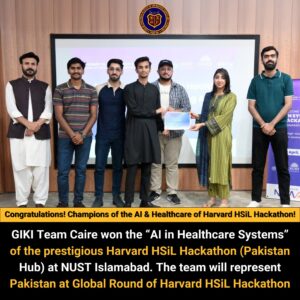
GIKI’s Team Caire achieved first position in the “AI in Healthcare Systems” category at the prestigious Harvard HSiL Hackathon (Pakistan Hub) held at NUST Islamabad, earning the opportunity to represent Pakistan at the global round. The team developed innovative artificial intelligence-based healthcare solutions aimed at improving medical diagnosis, patient care, and health system efficiency. By applying AI and data-driven technologies to real-world healthcare challenges, the initiative demonstrates the potential of engineering and computing to enhance health outcomes and support medical decision-making. This achievement aligns with SDG 3 by promoting innovative healthcare solutions, strengthening digital health systems, and contributing to improved accessibility, quality, and efficiency of healthcare services.

Health-care start-up by GIKI Alumni:

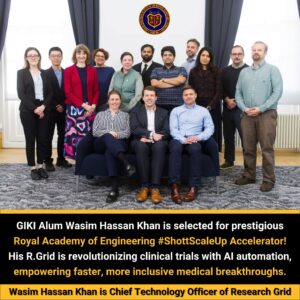
GIKI alumnus Wasim Hassan Khan (Batch 2017) has been selected for the prestigious Shott Scale Up Accelerator by the Royal Academy of Engineering, UK, a leadership development program designed to support senior executives in scaling high-growth engineering and technology enterprises. As Chief Technology Officer at Research Grid, a London-based health tech startup, he is leading the development of AI-powered automation systems that streamline and modernize clinical trial processes, improving efficiency, accuracy, and accessibility in healthcare research. His work contributes to the advancement of digital health innovation while also strengthening technology-driven enterprise growth. This achievement aligns with SDG 3 by enhancing healthcare research systems through AI-enabled solutions and with SDG 9 by promoting innovation, supporting high-impact technology startups, and advancing scalable engineering solutions in the global health tech industry.

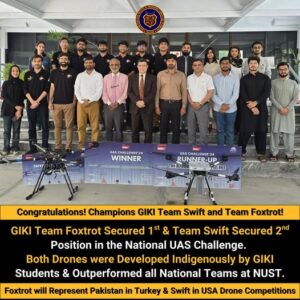
GIKI’s Team Foxtrot was crowned national champion at the Pakistan UAS Challenge for the second consecutive year, organized by the Institution of Mechanical Engineers (IMechE) at NUST Islamabad. The competition focused on the development of autonomous unmanned aerial systems for real-world applications, including the delivery of emergency medical supplies. Team Foxtrot demonstrated exceptional engineering capability by designing and successfully flying an autonomous drone capable of precise navigation, payload delivery, and accurate landing under mission constraints. Their performance, including a highly accurate emergency landing and recognition for “Best Safety and Airworthiness,” highlights advanced innovation in aerospace robotics and system reliability. This achievement aligns with SDG 9 by promoting technological innovation in autonomous systems and engineering excellence, and with SDG 3 by contributing to potential life-saving applications in medical logistics and emergency response through drone-based healthcare delivery systems.

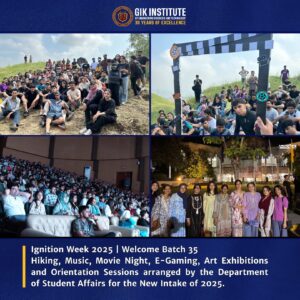
Ignition Week 2025 at GIKI welcomed Batch 35 (Class of 2029) through a series of student-led activities organized by the Office of Dean Student Affairs and various societies, including welcome ceremonies, hiking at GIKI Hills by the Adventure Club, a hilltop jamming session by CDES, and a Movie Night by the Media Club. The week also included a photo walk competition, celebrating creativity and student engagement through certificates for the best entries.

This initiative aligns with SDG 4 by supporting holistic, inclusive education and easing students’ transition into university life through co-curricular engagement and community building. It also supports SDG 3 by promoting mental well-being, social interaction, and recreational activities that foster a healthy and balanced campus environment.

HEC Intervarsity Zone C Table Tennis Championship

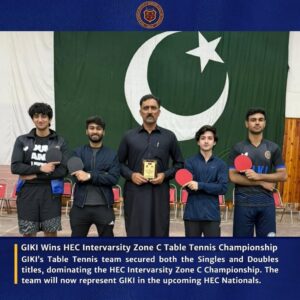
The GIKI Table Tennis Team won the HEC Intervarsity Zone C Table Tennis Championship, securing top positions in both singles and doubles events against leading universities and qualifying for the HEC Nationals. This strong performance reflects discipline, teamwork, and competitive excellence among students. The achievement aligns with SDG 3 (Good Health and Well-being) by encouraging physical fitness, active student life, and sports participation, and with SDG 4 (Quality Education) by promoting teamwork, leadership skills, and holistic development through co-curricular engagement and national-level competition.

A UNDP-sponsored Wellness Centre offering online counselling services for mental health and wellbeing of the students was inaugurated

GIK Institute has established Wellness Center in the new academic block on June 2021. Sehat Kahani has helped us to establish the wellness center while HEC and UNDP funded the project. Mental health counseling is provided to students and tele-mental health has been introduced.

The GIK Institute is the first private sector university that has established the centre. Amid frequent closure of educational institutions and start of online classes in the wake of Covid-19 pandemic the students faced difficulties, anxiety and even depression around the world. The governments and educational institutions started introducing the measures to carry out research regarding the impact, frequency and severity of psychological and mental health issues of the students.

Higher level of anxiety of the students caused by Covid certainly needed the measures for solving their mental health problems created due to academic disruption and education-related mental distress. Under the programme, a software application will be used for rendering online counselling as well as treatment services to the students.

News Link: https://technologytimes.pk/2021/06/19/hec-undp-and-sehat-kahani-inaugurated-three-wellness-centres/

GIKI and RMI signed an MOU to collaborate on developing advanced Artificial Intelligence (AI) tools to enhance the early detection and diagnosis of breast cancer.

The Memorandum of Understanding (MoU) signed between Ghulam Ishaq Khan Institute (GIKI) and Reliance Medical Institute (RMI) to collaborate on the development of advanced Artificial Intelligence (AI) tools for the early detection and diagnosis of breast cancer is a powerful example of how innovation in technology can directly contribute to Sustainable Development Goal 3 (SDG 3): Good Health and Well-being. This collaboration aims to leverage AI to improve diagnostic accuracy, reduce healthcare costs, and enable early intervention, ultimately saving lives and improving health outcomes for women. By enhancing early detection, this initiative seeks to address a critical healthcare challenge, as breast cancer is one of the leading causes of death among women worldwide. The use of cutting-edge technology aligns with SDG 3’s focus on ensuring healthy lives and promoting well-being for all, particularly through the use of innovation to reduce inequalities in healthcare access and improve the quality of health services. This partnership reflects GIKI’s commitment to applying technological expertise for the betterment of society and underscores the role of academic institutions in addressing global health challenges.

Healthcare Services at GIKI:

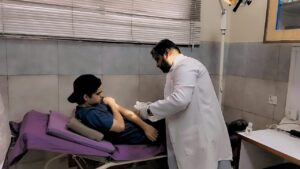
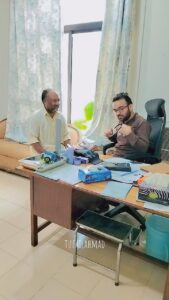
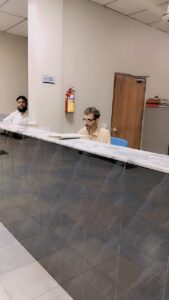
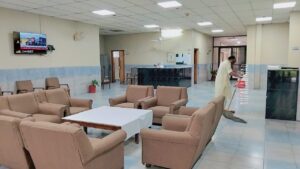
Since its establishment in 1993, Ghulam Ishaq Khan Institute of Engineering Sciences and Technology (GIKI) has maintained a comprehensive healthcare system to safeguard the physical and mental well-being of its students, faculty, staff, their families, and the surrounding community. The Institute operates a fully functional Medical Centre (MC) that provides 24/7 healthcare services, preventive healthcare, emergency response, laboratory diagnostics, pharmacy services, physiotherapy, ambulance services, and specialist referrals.

The Medical Centre is designed to provide immediate healthcare within the campus, eliminating delays associated with nearby hospitals located approximately 20–30 minutes away. Patients requiring advanced treatment are stabilized and transported through dedicated ambulance services to partner hospitals.

 Comprehensive Medical Facilities

The Medical Centre provides the following facilities:

  • 24/7 Outpatient Department (OPD) and emergency medical services.
  • Fully equipped Emergency Room (ER) with certified medical personnel.
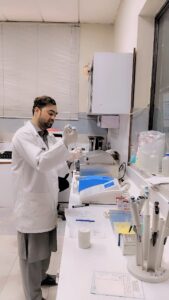
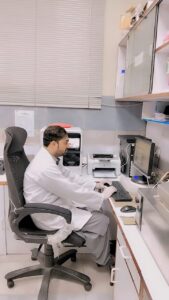
  • Clinical laboratory providing routine diagnostic investigations.
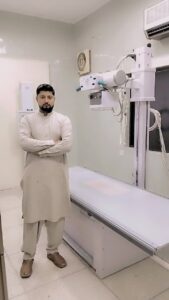
  • Digital X-ray facility for diagnostic imaging.
  • Ultrasound facility for diagnostic examinations.
  • Fully stocked 24-hour pharmacy supplying medicines from reputable pharmaceutical companies.
  • Dedicated physiotherapy unit.
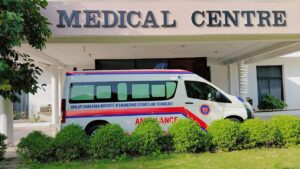
  • Ambulance services available around the clock for on-campus emergencies and referral to tertiary care hospitals.
  • First-aid services available in academic buildings, laboratories, hostels, sports facilities, and residential areas.

 Emergency Medical Equipment

The emergency unit is equipped with modern lifesaving equipment, including:

  • Cardiac monitor
  • Defibrillator (AED)
  • ECG machine
  • Pulse oximeter
  • Nebulizers
  • Oxygen cylinders
  • Intubation equipment
  • Ambu bags
  • IV infusion systems
  • Emergency medicines
  • Anti-rabies vaccine
  • Anti-snake venom
  • Tetanus vaccine
  • Trauma and emergency first-aid supplies

 Certified Healthcare Professionals

The Medical Centre is staffed by qualified healthcare professionals, including:

  • PMDC-registered physicians
  • 1 Senior Medical Officer
  • 3 Medical Officers
  • 4 Registered Staff Nurses
  • Laboratory Technicians
  • Radiographer
  • Pharmacy Assistants
  • Physiotherapy staff
  • Lady Health Worker
  • Ambulance Drivers
  • Ward Assistants
  • Reception and support staff

Medical officers remain physically present on campus 24 hours a day, ensuring immediate emergency response.

 Healthcare Accessibility

Healthcare services are available to:

  • Students
  • Faculty members
  • Administrative staff
  • Contract employees
  • Campus residents
  • Families and dependents of faculty and staff
  • Visitors requiring emergency medical assistance
  • Members of the surrounding community in emergency situations

Routine consultations, emergency treatment, first aid, laboratory investigations, and essential medicines are provided without charge for eligible campus residents.

In addition, faculty members, administrative staff, and their dependents are entitled to free medical treatment at the GIKI Medical Centre and can also avail treatment through the Institute’s panel hospitals under the institutional medical reimbursement and referral system. This ensures continuous access to specialized healthcare beyond the campus whenever required.

 Referral Network

For specialized treatment, GIKI has established referral arrangements with several leading healthcare institutions, including:

  • Combined Military Hospital (CMH)
  • Armed Forces Institute of Cardiology (AFIC), Rawalpindi
  • KRL Hospital, Islamabad
  • Shaukat Khanum Memorial Cancer Hospital
  • Mahaban Medical Complex, Topi

Patients requiring specialized care are transferred through the Institute’s ambulance service, accompanied by trained medical personnel whenever necessary.

 Preventive Healthcare and Public Health Initiatives

The Medical Centre actively promotes preventive healthcare through:

  • Routine health awareness campaigns.
  • Vaccination programs.
  • Dengue prevention campaigns.
  • Malaria awareness activities.
  • Cholera prevention awareness.
  • Polio awareness campaigns.
  • Seasonal disease surveillance in collaboration with local health authorities.
  • Regular inspection of cafeterias, hostels, and dining facilities to ensure food hygiene and public health standards.

Mental Health and Psychological Well-being

Recognizing the importance of mental health, GIKI provides confidential counseling services through the Office of Student Affairs.

Students have access to:

  • Individual counseling
  • Academic stress management
  • Psychological support
  • Crisis intervention
  • Personal development guidance

In addition, GIKI established a Wellness Center in collaboration with Sehat Kahani, HEC, and UNDP, providing:

  • Telemedicine
  • Tele-mental health consultations
  • Professional psychological counseling
  • Mental health awareness sessions

 Health Promotion Activities

Throughout the year, GIKI organizes numerous health and wellness initiatives, including:

  • Blood donation camps in collaboration with Fatimid Foundation and Abbottabad Blood Donation Society.
  • Mental health awareness seminars.
  • Self-care and stress management workshops.
  • Medical screening camps.
  • Health awareness sessions on nutrition and healthy lifestyles.
  • Physiotherapy awareness programs.
  • First-aid awareness sessions.
  • CPR and emergency response training (where applicable).
  • Anti-smoking and substance abuse awareness campaigns.
  • World Health Day and Breast Cancer Awareness activities (where organized).

 Hygiene and Environmental Health

The Medical Centre continuously monitors environmental health across the campus by:

  • Inspecting food preparation areas.
  • Monitoring drinking water quality.
  • Supervising sanitation and waste management practices.
  • Conducting vector control activities to reduce mosquito breeding.
  • Monitoring infectious disease outbreaks.

 Community Outreach

As a residential institution, GIKI extends its healthcare services beyond students by supporting:

  • Faculty and staff families.
  • Campus residents.
  • Contract workers.
  • Visitors during medical emergencies.
  • Public health awareness activities conducted in collaboration with healthcare organizations and government agencies.

 Recent Initiatives

Recent initiatives demonstrating GIKI’s commitment to health and well-being include:

  • Establishment of an Ultrasound Diagnostic Facility at the Medical Centre.
  • Expansion of Physiotherapy Services.
  • Launch of the Wellness Center in partnership with Sehat Kahani, HEC, and UNDP for telemedicine and mental health support.
  • Regular blood donation drives with Fatimid Foundation and Abbottabad Blood Donation Society.
  • Student discussion sessions on Productivity, Self-care, and Mental Well-being.
  • Annual infectious disease awareness campaigns focusing on dengue, malaria, cholera, and polio prevention.
  • Continuous upgrading of laboratory and diagnostic facilities.
  • Strengthening referral arrangements with panel hospitals to improve access to specialized healthcare.

Some of the services and features include:

  • Clinical Laboratory: The MC has an upgraded clinical laboratory offering routine tests and analyses.

  • Emergency Room (MI Room): The emergency unit at MC is well-equipped with lifesaving medical instruments, including:
    • Cardiac Monitor
    • ECG Machine
    • Nebulizer
    • Defibrillator
    • Pulse Oximeter
    • Intubation Set
    • Oxygen Cylinders
    • Various IV Infusions and Lifesaving Drugs
    • Ambo Bag
    • Vaccines (anti-venom, anti-rabies, tetanus, etc.)

  • Radiology: The MC also has an advanced X-ray unit (500mA X-Ray machine with CR system) for diagnostic imaging.
  • Pharmacy: A well-established pharmacy within the Medical Centre provides medicines from reputed multinational companies, ensuring 24/7 availability of prescribed medications.
  • Physiotherapy: A new facility of physiotherapy is available from 8am to 5pm for patients.
  • Ambulance Facility: GIK provides transport/ambulance services for pick-and-drop within the campus and for emergency transportation to external hospitals.

Medical Staff:

The Medical Centre operates with a team of highly qualified medical professionals:

  • Doctors (PMDC Registered):
    • Physician / MS
    • 1 Senior Medical Officer (SMO)
    • 3 Medical Officers (MO)
  • Other Qualified Staff:
    • Staff Nurses: 4
    • Lady health worker:1
    • Pharmacy Assistant: 2
    • Receptionist: 1
    • Ward Boy: 1
    • Radiographer: 1
    • Laboratory Technician: 2
    • Lady Aya: 2
    • Ambulance Drivers: 2
    • Sanitary Workers: 2

Medical Services:

  • OPD Services: The Medical Centre provides outpatient and emergencies services round the clock 24/7, divided in 03 shifts. i.e Morning, Evening and Night
  • Paramedical staff are available in two shifts (8 AM to 4 PM & 4PM to 10 PM and 1 paramedical staff remains on call in case of emergency from 10PM to 8AM. One doctor is always present at Mc physically
  • Emergency Care: In case of emergencies, patients are treated at the Medical Centre and referred to tertiary care hospitals if required. Medical assistants accompany patients during transfers, ensuring continuous care.

GIK Institute has agreements with several government and private hospitals, including CMH, AFIC Rawalpindi, Krl Hospital Islamabad, Shaukat Khanum Cancer Hospital, Mahaban medical complex Topi, for referrals and specialized treatment. Employees are eligible for reimbursement of medical expenses for themselves and their dependents.

Hygiene Monitoring:

  • Food Hygiene: Regular visits are made to areas where food is prepared and served (e.g., messes, cafeterias) to ensure food safety and hygiene standards.
  • Disease Awareness: The Medical Centre runs campaigns for the prevention of infectious diseases like dengue, malaria, cholera, and polio. We collaborate with local health authorities to monitor and prevent outbreaks.
  • Blood Donation Drives: The Medical Centre participates in blood donation camps 3-4 times a year in collaboration with organizations such as Fatimid Foundation and Abbotonian Blood Donation, encouraging the GIKI community to contribute.

Ultrasound Facility:

In a recent improvement to the Medical Centre’s capabilities, GIK Institute has established an ultrasound facility, further improving our ability to provide comprehensive health services to students, faculty, and staff.

Well-being of GIKI Students, Employees, Staff and Faculty

Student Counseling Services:

In addition to physical health services, GIK offers comprehensive student counseling through the Office of Student Affairs. The student counselor assists students in personal, academic, and mental health matters, offering confidential support to help them cope with academic pressures and life challenges.

Day Care Center at GIK Institute:

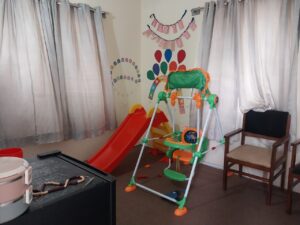
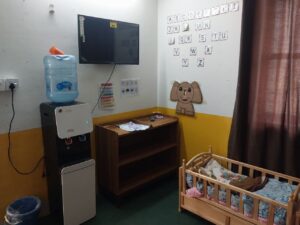
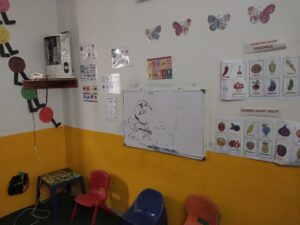
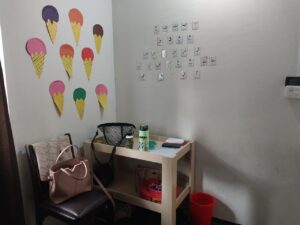
A Day Care Centre was established at the Institute in 2024–25 — a progressive step supporting faculty, staff, and students who are also parents. This contributes to gender equality, work-life balance, and an inclusive campus environment.

Accessible Toilets for Disabled Persons:

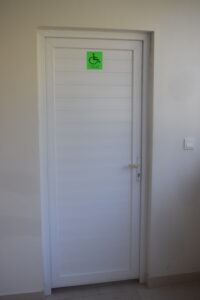
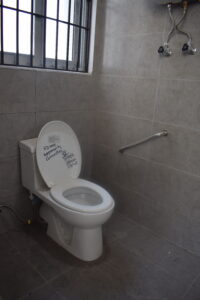
GIKI has installed specially designed toilets for persons with disabilities to ensure accessibility, comfort, and dignity for all members of the campus community. These facilities are equipped with user-friendly features such as wider entrances, support handrails, and adequate space for wheelchair access and movement. Located in easily accessible areas of the campus, these toilets reflect the institute’s commitment to creating an inclusive environment where disabled individuals can move independently and utilize campus facilities with ease and confidence.

Ramps Installation at GIKI for Disabled Persons:

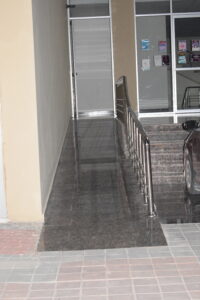
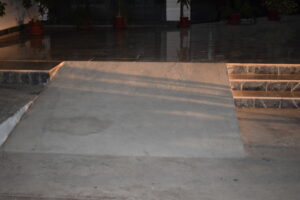
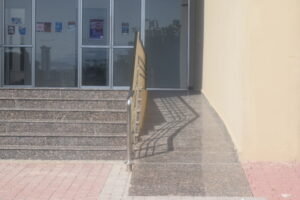
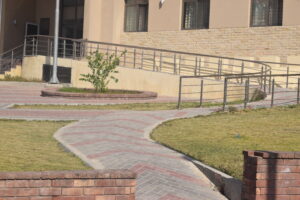
GIKI is committed to providing an inclusive and accessible environment for all students, staff, and visitors. The newly constructed Academic Block is fully accessible, featuring ramps and specially designed restrooms for people with disabilities. In addition, pedestrian pathways across the campus have been thoughtfully designed to ensure ease of movement and convenience. Special ramps on footpaths further enhance mobility, enabling disabled individuals to navigate the campus independently, safely, and comfortably.