The IT department at GIK Institute supports a strong educational environment by maintaining technological infrastructure and providing reliable access to digital resources. It manages networks, data security, technical support, and online platforms, enabling the campus community to meet changing educational needs and prepare students for a digital future.
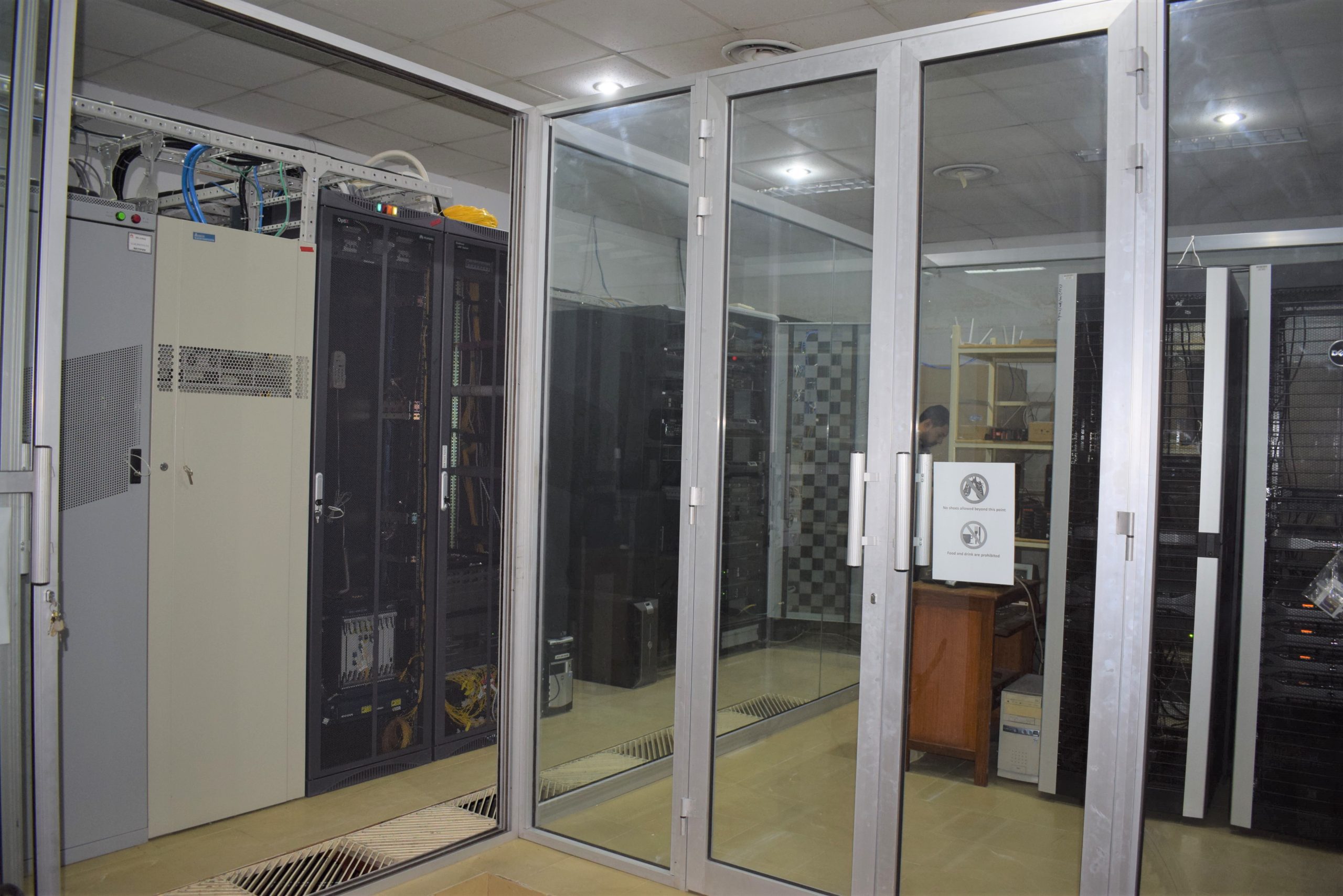
As a fully residential campus, the Institute provides 24/7 connectivity and access to digital resources. The IT Department offers comprehensive technological support to students, faculty, staff, and residents, maintaining campus-wide IT infrastructure for teaching, learning, and research.
Information Technology (IT) Facilities at GIK Institute
Information Technology (IT) facilities at GIK Institute are essential for enhancing the educational experience, supporting research, and streamlining administrative processes. As a modern university, GIK Institute invests heavily in IT infrastructure to ensure that students, faculty, and staff have access to the latest technologies.
GIK Institute has secured Internet bandwidth from two different ISPs (Internet Service Providers), namely PERN (Pakistan Education & Research Network) and PTCL (Pakistan Telecommunication Company Ltd.). PERN connects universities and research institutes via high-speed Internet, including backup links, video conferencing, digital libraries, unified communication, and access to Turnitin Software to support students in their research and academic activities. Currently, PERN provides a CIR Internet bandwidth of 500 Mbps, while PTCL offers 330 Mbps.
Reliable Wi-Fi and network infrastructure are essential for supporting the digital needs of the campus community. GIK Institute provides comprehensive Wi-Fi coverage throughout all buildings, including classrooms, libraries, hostels, and outdoor areas. High-speed, dependable Internet connections facilitate online learning, research, and administrative tasks. Strong network security measures, such as firewalls and encrypted connections, safeguard sensitive data and preserve network integrity.
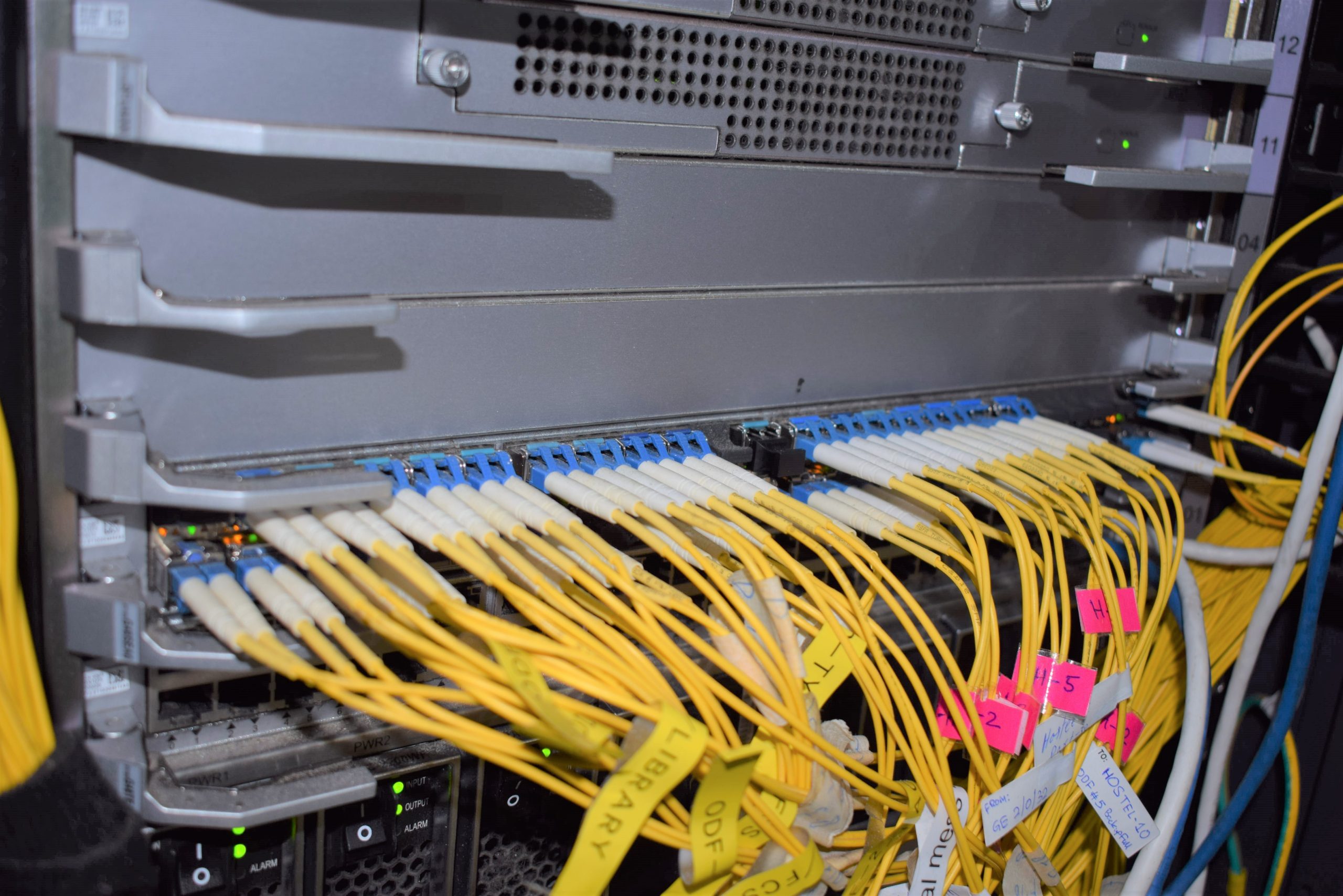
The IT Department offers both wired and wireless gigabit network connectivity across the entire campus. All buildings are linked to the Data Center with fiber optic cables. Ethernet connections are available within all buildings, and over 400 Wi-Fi access points are installed throughout the campus for seamless internet access.
GIK Institute provides modern computer laboratories and advanced research computing facilities to support teaching, learning, and research across all academic disciplines. The computer laboratories are equipped with high-performance desktop computers, Apple Mac systems, and specialized software for engineering, programming, simulation, data analysis, and general academic use.
To support advanced research, the Institute has established a state-of-the-art Artificial Intelligence (AI) Laboratory equipped with GPU-based workstations and locally deployed AI models for research in machine learning, deep learning, natural language processing, computer vision, generative AI, and related fields. In addition, the High-Performance Computing (HPC) Facility, housed in the Data Center, provides 160 CPU cores, 1,024 GPU cores, 640 GB RAM, and a 10 Gbps Ethernet interconnection to support computationally intensive research, simulations, modeling, and large-scale data analytics across all faculties.
Learning Management System (LMS) is essential to modern education, enabling digital delivery of course materials and facilitating communication between students and instructors. Instructors can upload course materials (lectures, readings, and assignments), making them easily accessible to students. LMS platforms support online assessments (quizzes, exams, and assignment submissions), streamlining the evaluation process. Features like discussion boards, messaging, and announcements keep students engaged and informed.
A Campus Management System (CMS) is a comprehensive software solution designed to simplify various administrative and academic tasks within educational institutions. It helps manage student information, course enrollments, attendance records, and financial transactions efficiently. By consolidating data and automating processes, the system improves communication among students, faculty, and staff, ultimately creating a more organized and cooperative campus environment.
Enterprise Resource Planning (ERP) is an extensive software system that combines essential business processes within an organization into a single platform. It simplifies operations by merging data from different departments, such as Finance, Procurement and HR. By enhancing visibility and efficiency, ERP helps institutes make better decisions, use resources more effectively, and improve overall productivity, ultimately fostering growth and competitiveness in the academic arena.
The Online Transport Management System is a web-based application that facilitates the online reservation of bus seats for students, faculty, and staff at GIK Institute. The system allows users to conveniently book one-way or round-trip tickets for weekend travel on various routes, including Islamabad, Peshawar, and Abbottabad. By automating the booking process, the application has eliminated manual reservations, improved operational efficiency, and provided a convenient, transparent, and user-friendly transport service for the campus community.
GIK Institute’s Smart classrooms are equipped with advanced technologies to improve teaching and learning experience. Interactive Screens or digital boards allow instructors to display and interact with content dynamically. High-quality cameras and sound systems ensure that all students can see and hear the lecture material clearly. These smart classrooms also have Lecture Capture / Recording systems that enable the recording of lectures for later review, aiding in student learning and retention. Smart classrooms are one such facility that enhances the quality of teaching and learning to make them more innovative and enjoyable.
GIK has implemented smart classroom solutions in its main lecture halls. These state-of-the-art facilities include the latest interactive digital boards, AI-powered tracking cameras, lecture recorders, and other equipment. The setup creates a highly interactive environment for students, enabling them to attend lectures and scholarly sessions in a blended mode both on campus and from anywhere outside the campus.
HEC National Digital Library (DL) is a program designed to provide researchers in public and private universities in Pakistan, as well as non-profit research and development organizations, with access to international scholarly literature through electronic delivery. It offers access to high-quality, peer-reviewed journals, databases, articles, and e-books across a wide range of disciplines. The e-books support program allows researchers to electronically access text and reference books in various subject areas. Approximately 75,000 electronic resources have been made available through the Digital Library Program. GIK Institute has a rich collection of e-books that are accessible within the campus. These books cover a variety of subjects, including computer hardware and software engineering, engineering sciences, mechanical engineering, electronic engineering, and humanities/management science, and are accessible via the intranet. GIK also maintains a comprehensive collection of e-books related to all disciplines of the institute. Additionally, faculty publications, final year project reports, and PhD theses are available online.
A website acts as the public face of an institution, and the IT Department manages the GIK Institute website, which is essential for providing key information and resources to prospective and current students, faculty, and staff. It functions as a central location for accessing academic programs, admission requirements, campus news, and events. The website boosts the institute’s visibility and reputation by highlighting achievements, research, and community involvement. Additionally, it provides easy access to online services, such as course registration and academic advising, making administrative tasks more efficient. In short, a well-designed university website is vital for effective communication, accessibility, and the overall success of the institution.
The marketing department manages the GIK Institute’s social media accounts. Social media is vital in today’s society because it allows for instant communication and sharing of information worldwide. It enables individuals and businesses to connect with diverse audiences, build relationships, and form communities. Social media platforms are powerful marketing tools that help brands reach potential customers and engage with them directly. Additionally, social media can promote social change by raising awareness about critical issues and rallying support for various causes. Overall, its impact on communication, marketing, and social activism highlights the important role social media plays in the modern world.
The IT Department has access to licensed software included in the PERN plans (Education Program) for students and faculty. Under this plan, the following licensed software is available: Microsoft Windows, Microsoft Office 365, and Azure Dev tools for Education. Additionally, our faculty and students can participate in Microsoft Learning Paths in areas such as software development, databases, AI, data science, and more. Moreover, GIK Institute has established an in-house software cell that develops customized software and web applications in collaboration with faculties and departments to meet their needs and help them use modern tools.
Ensuring a safe and secure environment for students, faculty, and staff at GIK is of utmost importance. Therefore, GIK has prioritized campus security and surveillance to protect the entire community. Dedicated IP surveillance CCTV cameras are installed throughout the campus, along with a command and control system, serving as key security measures that prevent both internal and external threats and ensure strict security protocols are followed on campus. Campus security tackles various challenges, including preventing violence, managing student diversity, controlling access points, and providing 24/7 surveillance.
The IT Helpdesk provides efficient technical support to faculty, administrative staff, students, and residents on campus. It serves as the primary point of contact for the GIK community regarding questions and issues related to IT services. The Helpdesk receives, processes, and responds to service requests during working hours. To deliver prompt IT assistance, the Helpdesk manages various complaints through an online system. The team offers maintenance and repair services for computing equipment, technical support for online and offline meetings and webinars, and photography of official events. Located on the 1st floor of the New Academic Block, the IT Helpdesk operates from 8:00 a.m. to 5:00 p.m. and can assist with inquiries or provide support via phone, email, or in person. Contact the Helpdesk by dialing 6-2010 from within GIK or by email at ithelpdesk@giki.edu.pk.
| S. No. | Name | Designation | |
| 1. | Mr. Abdul Salam Khan | Director (IT) | abdulsalam@giki.edu.pk |
| 2. | Mr. Muhammad Salman | Manager (IT) | salman@giki.edu.pk |
| 3. | Mr. Shakir Ahmad | System Administrator/Webmaster | shakir@giki.edu.pk |
| 4. | Mr. Shahid Islam | D.D Software Development | shahid.islam@giki.edu.pk |
| 5. | Ms. Mehar Un Nisa | D.D Software Development | meharunnisa@giki.edu.pk |
| 6. | Mr. Muhammad Naeem | A.D Software Development | muhammad.naeem@giki.edu.pk |
| 7. | Mr. Faiz Ullah | Asst. Network Administrator | faiz.ullah@giki.edu.pk |
| 8. | Mr. Zeeshan Zaman | IT Assistant | zeeshan.zaman@giki.edu.pk |
| 9. | IT Helpdesk | Muhammad Hassan/Shah Said/Anam Javed | ithelpdesk@giki.edu.pk |