SDG 4: Quality Education

Home > SDG 4: Quality Education

Introduction:

Sustainable Development Goal 4, Quality Education holds particular relevance at GIKI, where the institute’s mission centers on fostering innovation, critical thinking, and lifelong learning. By emphasizing inclusive and high-quality academic experiences, GIKI contributes to the global pursuit of accessible and equitable education. Through its modern curricula, research-driven environment, and commitment to developing socially responsible engineers and leaders, the institute actively supports the principles of SDG 4 while empowering students to become agents of positive change in society.

GIK Institute implement policies to ensure that all students, regardless of ethnicity, religion, disability, immigration status, gender, or other characteristics, have equal access to activities and opportunities. These policies are usually outlined in the institution’s non-discrimination, diversity, and inclusion policies. Universities often have dedicated offices, like an Office for Diversity and Inclusion or an Accessibility Services office, that work to enforce these policies and make resources available for diverse and marginalized groups.

Typically, these policies cover access to extracurricular activities, student organizations, academic programs, housing, and other aspects of university life. By ensuring these protections, universities strive to foster an inclusive campus environment where everyone feels welcome and supported.

Equality, Diversity, and Inclusion (EDI) Policy of Ghulam Ishaq Khan (GIK) Institute of Engineering Sciences and Technology:

GIK Institute is committed to promoting equality, diversity, and inclusion across all aspects of our operations. We recognize that diversity and inclusion are essential to providing an enriching and supportive learning environment for all our students and staff. We are committed to creating an inclusive community that respects and values the diversity of our community and strives to eliminate discrimination and promote equality.

https://giki.edu.pk/wp-content/uploads/2023/09/Equality-Diversity-Inclusion-Policy-of-GIK-Institute.pdf

GIKI’s admissions process is purely merit-based, with students selected through a transparent entrance examination system that welcomes applicants from all provinces and backgrounds across Pakistan, as well as from abroad. The Institute also offers need-based and merit-based scholarships such as the Ehsaas Scholarship, GIKI Financial Assistance Program, and PEEF  Endowment Fund Scholarships to support students from underprivileged or remote areas, ensuring financial constraints do not limit access to quality education.

Institute is open to all (admission Policy):

https://giki.edu.pk/admissions/admissions-undergraduates/

https://giki.edu.pk/2024/10/01/ug-prospectus-2024/

GIKI promotes gender inclusivity by encouraging female participation in all fields of engineering and technology and by supporting student societies like the Women in STEM Club, which works to empower women in science and engineering. The campus is designed to be accessible to students with disabilities, with support provided as needed to facilitate full participation in academic and co-curricular life. GIK institute has Women Engineering Society (WES) that promotes gender equality.

Moreover, GIKI’s outreach and awareness programs such as visits to schools and colleges across Pakistan are conducted without discrimination, ensuring that students from diverse communities and educational backgrounds are equally informed about opportunities at the Institute. Through these measures, GIKI demonstrates its commitment to building an inclusive, diverse, and equitable learning environment for all.


Applying For Masters Abroad 101 by Google Developer Students Club 13th Feb 2025

On 13th February 2025, the Google Developer Students Club (GDSC) hosted a session titled “Applying For Masters Abroad 101” to guide students aspiring for higher education overseas. The event covered key aspects of application processes, scholarships, standardized tests, and networking opportunities, helping participants gain clarity on pursuing academic excellence abroad.

The initiative supported Quality Education (SDG 4) by providing students with access to knowledge and resources for global academic opportunities. It also aligned with Partnerships for the Goals (SDG 17) by emphasizing international collaborations and encouraging students to connect with global institutions for their educational journeys.

Educational Expo by SOPHEP 20th Feb 2025

On 20th February 2025, the SOPHEP Society hosted an Educational Expo at GIK under the Department of Student Affairs. The event provided students with valuable opportunities to explore diverse academic programs, scholarships, and career pathways both within Pakistan and abroad. Representatives from universities, educational consultancies, and professional bodies engaged with students, offering guidance on admissions, financial aid, and skill development.

The expo directly advanced Quality Education (SDG 4) by equipping students with access to information and resources that improve educational opportunities. It also promoted Reduced Inequalities (SDG 10) by creating equal access for students from different backgrounds, ensuring that information and opportunities were accessible to all regardless of socioeconomic status.

FREE EDUCATIONAL RESOURSES:

The GIK Institute provides limited but meaningful free access to educational resources for individuals who are not formally enrolled at the university. Through public seminars, webinars, and outreach programs, GIKI extends learning opportunities to students from schools, colleges, and other institutions across Pakistan. The Educational Expo and Open Days are major events where visitors can access academic displays, interact with faculty, and attend informative sessions and demonstrations.

Additionally, GIKI’s official website and SDGiki platform provide open access to research summaries, publications, and awareness materials related to the Sustainable Development Goals (SDGs). The Central Library offers guided visits for students from other institutions during special events such as Book Fairs, promoting public engagement with academic resources. Some faculty members also share recorded lectures and educational content online to support broader learning communities. Through these initiatives, GIK Institute ensures that its educational and intellectual resources contribute to public knowledge, lifelong learning, and community development beyond its enrolled student body.

Prime Minister’s High Impact IT Training Program

The GIK Institute, in collaboration with Ministry of Federal Education and Professional Training (MOFEPT) and National Vocational and Technical Training Commission (NAVTTC), has started an IT Training Program in Islamabad under the Prime Minister’s High Impact Technology Initiative for 3 months courses for unemployed youth. The IT training program aims to provide essential IT skills to engineers and graduates. This initiative aims to boost employability, tailor training to current technologies, and foster a thriving IT echo-system through collaboration with the Federal Government and Industry.

IT Training Program Islamabad – Ghulam Ishaq Khan Institute of Engineering Sciences and Technology – GIKI

GIK Institute Provides Unlimited Use of MATLAB and Simulink Products to All Students, Educators, and Researchers

Matlab – Ghulam Ishaq Khan Institute of Engineering Sciences and Technology – GIKI

Free access to educational resources for those not studying at the university.

  1. Central Library https://librarygiki.weebly.com/
  2. Faculty Member Dr. Ahmad Kamal Hassan Youtube Lecturer https://www.youtube.com/c/AKHassan
  3. Faculty Member Dr. Hadeed Sher Youtube Lecturer https://www.youtube.com/channel/UCvewGTr3E4HUOZmAKJRoNDg
  4. Faculty Member Dr. Khalid Rahman Youtube Lecturer https://www.youtube.com/user/azazel1049/videos

Executive educational programs and vocational trainings:

GIK Institute offers executive education programs and vocational training courses that are open to the general public. These short courses are designed to provide practical skills and industry insights for professionals and individuals who are not enrolled in regular degree programs, offering an accessible way to gain specialized knowledge and training.

Summer Camp for kids by Catalyst GIK Institute:

During the summer of 2024, GIKI organised the STEAM Minds Summer Camp specifically for the children of faculty members and employees. The week-long programme blended Science, Technology, Engineering, Arts and Mathematics (STEAM) learning with fun, hands-on projects, allowing young participants to explore robotics, coding, creative design and sustainable innovation in a campus environment. By hosting the camp internally for the university community, GIKI provided a safe, stimulating setting where children could engage with expert mentors, experiment with new tools, and build peer relationships—all while the faculty and staff parents benefited from this enriching developmental opportunity for their children. The initiative reflects GIKI’s commitment to nurturing curiosity, creative thinking and early-stage technical literacy among the next generation.

 https://www.facebook.com/watch/?v=1459338794746021

 GIKI holds AI boot camp for STEM graduates

A prominent example is the AI Boot Camp for STEM Graduates held in 2024, which was designed to equip participants from across Pakistan with practical skills in Artificial Intelligence, Machine Learning, and Data Science. The program provided free access to expert-led sessions, hands-on training, and mentorship opportunities, reflecting GIKI’s commitment to promoting advanced technological education beyond its enrolled students.

https://www.dawn.com/news/1855328?utm_source=chatgpt.com

 CPD Activities/courses offered by GIK Institute:

The Ghulam Ishaq Khan Institute of Engineering Sciences & Technology (GIKI) offers a robust range of Continuing Professional Development (CPD) activities and courses designed for academic staff, industry professionals, and graduate participants seeking to expand their knowledge and skills.

Educational outreach activities:

GIK Institute often engages in educational outreach activities beyond campus. These can include tailored lectures, demonstrations, and workshops in local schools and community centers, sometimes led by faculty or as part of voluntary student-run initiatives. Such outreach aims to inspire interest in STEM fields and provide educational support to the wider community.

The Ghulam Ishaq Khan Institute of Engineering Sciences and Technology (GIKI) actively conducts outreach sessions across schools and colleges nationwide to inspire and guide the next generation of engineers, innovators, and leaders. Through these sessions, the GIKI outreach team engages with students to share insights about the Institute’s academic programs, admissions process, scholarships, campus life, alumni achievements, and its three decades of excellence in engineering education. These visits aim to bridge the gap between secondary education and higher studies in science and technology, motivating young minds to pursue excellence and innovation.

A great session with the disciplined, talented, and motivated students and staff of Cadet College Petaro. During the session, we discussed the GIK programs, admissions, scholarships, alumni, and 30 years of excellence. Ghulam Ishaq Khan Institute of Engineering Sciences and Technology.

https://www.linkedin.com/feed/update/urn:li:activity:7155912975235661825/

Each year student societies at GIK Institute run several community service initiatives. The top among these societies is Project Topi. Project Topi is a completely student run, not-for-profit, non-government, and volunteer-based organization situated in Ghulam Ishaq Khan institute of Engineering in Topi, Swabi. Project Topi is GIK’s sole premier welfare society. This organization is also classified as an ‘A class’ society by GIK’s administration due to its extraordinary diligence and effectiveness in its operation. Currently, there are about 26 active societies within GIKI that work in different technical and non-technical domains, and all these societies use the platform of Project Topi to extend their service to the people of Topi. Thus, this society serves as an open platform for anyone seeking to contribute to social welfare, and we are incredibly gratified to everyone who partakes. Its inception was a result of a couple of young students’ desire and efforts to alleviate poverty. Project Topi is solely managed and run by students through an efficient hierarchical structure.

Every year volunteer calls are conducted and then after overseeing and evaluating the selected volunteers the successful ones are inducted through a transparent and merit-based manner to recruit the junior working body. Project Topi helps the underprivileged and deserving individuals in various walks of life, be it medical bills, educational expenses, emergency blood donations, miscellaneous other cases and so forth; to maintain help and support to them Project Topi has devised a complete operating structure which gets efficient every year as it constantly learns from its shortcomings and experiences. Project Topi has developed different modules to uplift and support the deserving people. Project Topi has a donor database, which it contacts, as well as openly asks for donations, Project Topi accepts both Sadaqah and Zakat.

Informative Sessions at GIKI:

GIKI hosted an academic talk titled “The Next ChatGPT Moment is Coming from Biology: How and What We Can Do?” delivered by Dr. Faisal Khan, Director of the federally funded Precision Medicine Lab in Peshawar and an Oxford-trained scientist. The session provided students and faculty with insights into the convergence of artificial intelligence and modern biological sciences, particularly in the field of precision medicine and data-driven healthcare innovation. By exposing participants to cutting-edge interdisciplinary research, the event strengthened academic learning, encouraged critical thinking, and promoted awareness of emerging technologies shaping the future of science and engineering. This initiative aligns with SDG 4 by enhancing quality education through knowledge exchange, expert engagement, and exposure to frontier research domains.

https://www.facebook.com/photo.php?fbid=1012070754281311&set=pb.100064351887024.-2207520000&type=3

Generative AI for Executives” training program

GIKI successfully concluded the “Generative AI for Executives” training program, bringing together senior industry leaders, CEOs, entrepreneurs, and academicians from across Pakistan for high-level capacity building in emerging artificial intelligence technologies. The program provided participants with advanced insights into generative AI applications, data-driven decision-making, and the evolving role of AI in business transformation. Through expert-led sessions, exposure to state-of-the-art AI, Data Science, and Cybersecurity laboratories, and interactive discussions with faculty and researchers, the initiative strengthened executive learning and promoted continuous professional development. This program aligns with SDG 4 by enhancing lifelong learning opportunities, bridging academia-industry knowledge gaps, and equipping professionals with future-ready digital competencies essential for innovation-driven economic growth.

https://www.facebook.com/photo.php?fbid=1018220560332997&set=pb.100064351887024.-2207520000&type=3

Seminar:

GIKI organized an insightful seminar titled “AI Engineering, Industry Landscape, and Trends” featuring Ms. Srividya Subramanian (Vidya) Vidyasagar, Global Head for Cloud and Production Engineering (Retail Banking) at Standard Chartered Singapore. The session provided students and faculty with valuable exposure to emerging trends in artificial intelligence, cloud computing, and digital transformation within the global banking and technology sectors. By bridging academic learning with real-world industry practices, the seminar enhanced students’ understanding of applied AI engineering and its growing role in financial services and enterprise systems. This initiative aligns with SDG 4 by promoting high-quality, industry-relevant education, strengthening professional awareness, and supporting the development of future-ready skills in advanced technology domains.

https://www.facebook.com/photo.php?fbid=1057111726443880&set=pb.100064351887024.-2207520000&type=3

Interactive session on academic success, personal development, and navigating global opportunities in higher education and research

GIKI hosted an inspiring interactive session with Prof. Dr. Waseem Haider from Central Michigan University, focused on academic success, personal development, and navigating global opportunities in higher education and research. The session provided students and faculty with valuable guidance on research pathways, international exposure, and strategies for excelling in competitive academic environments. Through knowledge sharing and mentorship, the event strengthened students’ motivation and awareness of global academic standards. This initiative aligns with SDG 4 by promoting high-quality education, fostering lifelong learning, and enhancing academic and professional development opportunities for students and faculty.

https://www.facebook.com/photo.php?fbid=1130361072452278&set=pb.100064351887024.-2207520000&type=3

4-week intensive Full-Stack AI Bootcamp

GIKI is offering a 4-week intensive Full-Stack AI Bootcamp covering Machine Learning, Transformers, GPT, DALL·E, GANs, and MLOps, designed to provide hands-on training in modern artificial intelligence technologies. The program focuses on bridging theoretical knowledge with practical implementation, enabling participants to develop industry-relevant AI skills and gain exposure to cutting-edge tools used in real-world applications. With structured training, lab-based learning, and access to advanced computing concepts, the bootcamp supports capacity building in emerging digital technologies.

This initiative aligns with SDG 4 by promoting high-quality, skill-based education and lifelong learning opportunities, and with SDG 9 by strengthening innovation capacity, advancing digital skills development, and preparing a workforce equipped for AI-driven technological transformation.

https://www.facebook.com/photo.php?fbid=1132009458954106&set=pb.100064351887024.-2207520000&type=3

GIKI signs MoU with Mindhyve.ai

Ghulam Ishaq Khan Institute (GIKI) signed an MoU with Mindhyve.ai to promote academic innovation and enhance teaching, learning, and research through Artificial Intelligence. The collaboration focuses on integrating AI tools into education, strengthening faculty capabilities, and exploring new opportunities for AI-driven academic development. This initiative aligns with SDG 4 by improving access to modern, technology-enabled education, and SDG 9 by fostering innovation in academic infrastructure and advancing AI-based learning ecosystems.

The Accreditation Inspection Committee of the Higher Education Commission (HEC) and the National Computing Education Accreditation Council – NCEAC visited the GIKI for BS Artificial Intelligence degree accreditation

The Accreditation Inspection Committee of the Higher Education Commission (HEC) and the National Computing Education Accreditation Council – NCEAC visited the GIKI for BS Artificial Intelligence degree accreditation. Prof Dr S. M. Hasan Zaidi, Pro-Rector (Academic), and Prof. Dr. Qadeer ul Hasan, Dean FCSE, received the accreditation team. The Head of Department (CS&AI), Associate Professor Dr. Salman Ahmed, briefed the team about the curriculum, state-of-the-art laboratories, smart classrooms, and other teaching and learning activities. During the exit meeting with the Rector, Prof. Dr. Fazal Khalid, SI, the team appreciated GIK Institute’s commitment to imparting quality computing education.

GIK Teacher’s Day: Honoring Excellence and Bestowing Awards

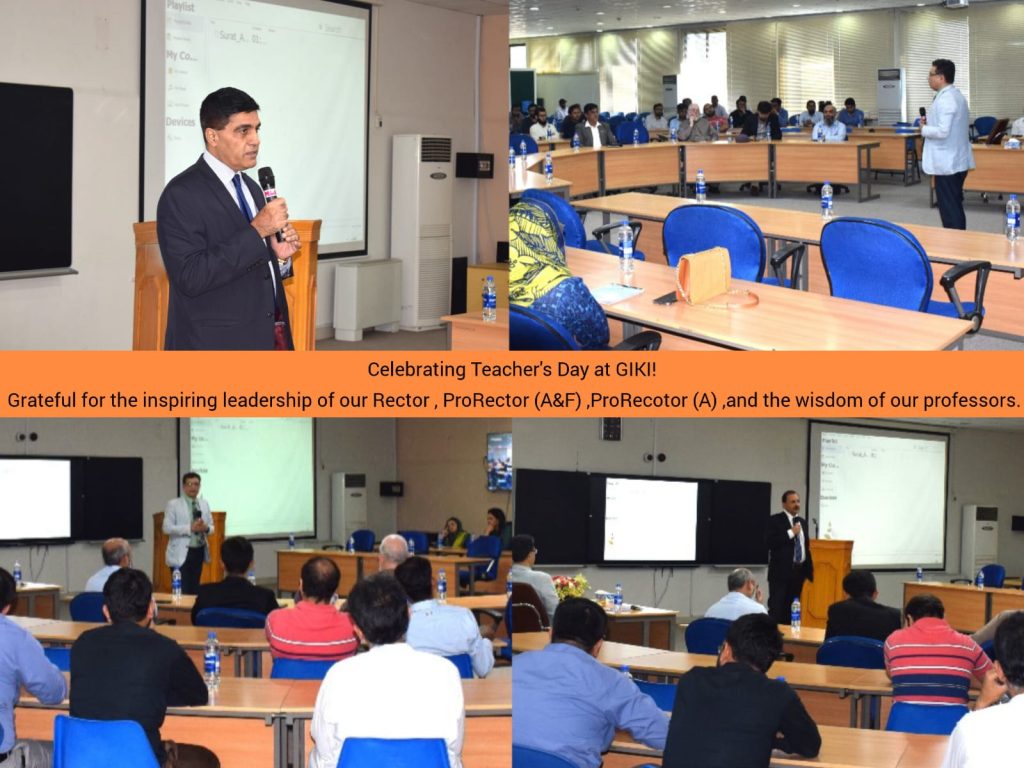
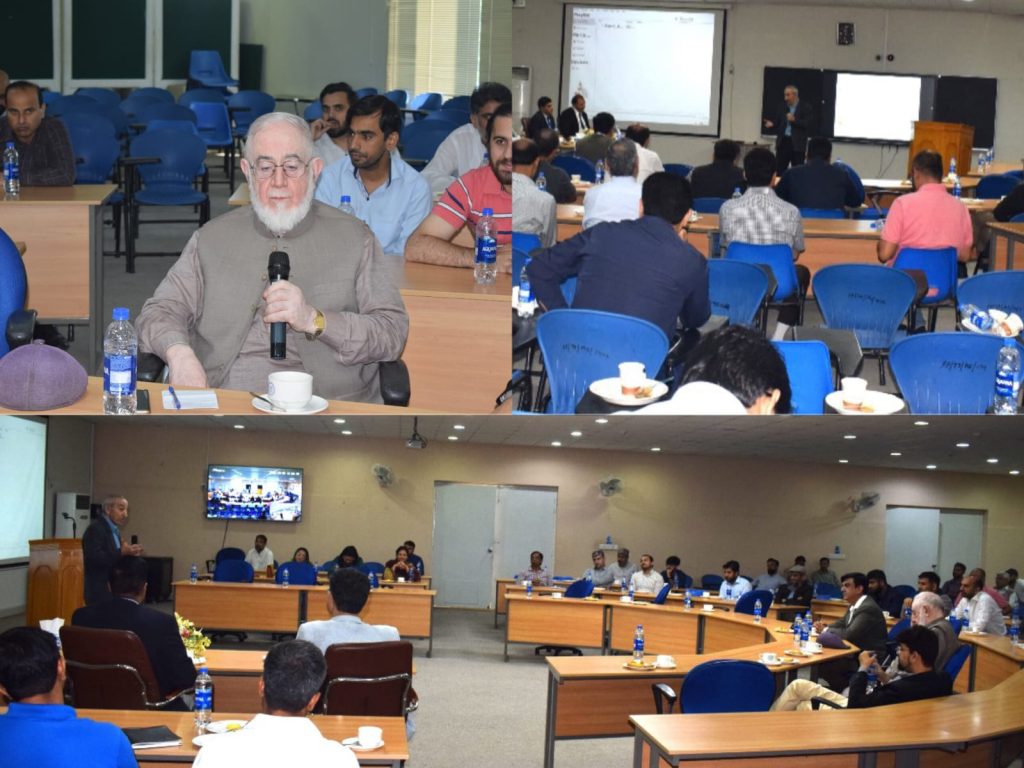
At the esteemed GIK Institute, Teacher’s Day was a grand affair, paying homage to the relentless efforts and wisdom of our educators. The event celebrated not only the inspiring leadership of our Rector and ProRectors but also recognized the exceptional contributions of our dedicated professors. Highlighting the day’s events was the prestigious Best Teacher Award, presented by the GIK Rector, which underscored the Institute’s commitment to academic brilliance and pedagogical excellence. It was a day of gratitude, reflection, and appreciation for those who shape the minds of tomorrow.

GIK Institute Participates in the 3rd China Pakistan Technology Transfer Workshop Fostering Collaborative Innovation. GIKI Prof. Dr. Zahid Halim highlighted Pakistani expertise projects CS & AIGIK Institute Participates in the 3rd China Pakistan Technology Transfer Workshop Fostering Collaborative Innovation.

Ghulam Ishaq Khan Institute (GIKI) participated in the 3rd China-Pakistan Technology Transfer Workshop, focusing on fostering collaborative innovation between the two nations. During the workshop, Prof. Dr. Zahid Halim from GIKI highlighted Pakistani expertise in fields such as Computer Science and Artificial Intelligence (AI), showcasing the institute’s strong contributions to advancing technology and innovation in these areas. This participation aligns with Sustainable Development Goal 4 (SDG 4): Quality Education, as it emphasizes the importance of global knowledge exchange and collaboration in the fields of education, research, and technology. By engaging in such international forums, GIKI contributes to enhancing the quality of education and research within Pakistan, while also expanding opportunities for students and faculty to learn from global advancements. Collaborative efforts in innovation ensure that students are exposed to cutting-edge technologies, preparing them with the skills and knowledge necessary to tackle global challenges and contribute to sustainable development.

Rector GIKI, Prof. Dr. Fazal A. Khalid, SI, delivered a keynote talk & participated in the panel discussion on “Curriculum Development Through Project-Based Learning and CDIO” at IIUI, Islamabad. As the chief guest, he distributed shields and certificates to the participants during the event’s closing ceremony.

Rector of GIK Institute, Prof. Dr. Fazal A. Khalid, SI, delivered a keynote talk and participated in a panel discussion on “Curriculum Development Through Project-Based Learning and CDIO” at International Islamic University Islamabad (IIUI). This engagement directly aligns with Sustainable Development Goal 4 (SDG 4): Quality Education, as it focuses on enhancing educational practices and the development of curricula that are more hands-on, student-centered, and aligned with real-world applications. Through his discussion on Project-Based Learning (PBL) and the CDIO (Conceive-Design-Implement-Operate) framework, Prof. Dr. Khalid emphasized the importance of equipping students with practical skills, problem-solving abilities, and industry-relevant competencies, which are essential for success in the modern workforce.

Such initiatives improve the quality of education by ensuring that students not only gain theoretical knowledge but also develop the critical thinking and collaborative skills necessary to tackle complex global challenges. Furthermore, by distributing shields and certificates to participants, Dr. Khalid underscored the importance of recognizing excellence in educational innovation, motivating educators and students alike to continue striving for higher standards in learning.

Sharif University of Technology (SUT), Iran, and Ghulam Ishaq Khan Institute (GIKI) aims to Forge Strategic Partnership in Engineering Education

The strategic partnership between Sharif University of Technology (SUT) in Iran and Ghulam Ishaq Khan Institute (GIKI) in Pakistan to enhance collaboration in engineering education is a significant step towards advancing Sustainable Development Goal 4 (SDG 4): Quality Education. This partnership aims to foster mutual exchange of knowledge, resources, and expertise, contributing to the development of high-quality, accessible, and inclusive education in the field of engineering. By sharing best practices in curriculum development, faculty exchange, joint research initiatives, and student mobility, both universities are working towards improving educational standards, enriching the learning experience, and ensuring that students are well-equipped to tackle global challenges.

Such international collaborations not only elevate the quality of education but also provide students with broader opportunities for cross-cultural learning, research, and career development, ultimately contributing to the creation of a more sustainable, innovative, and educated global workforce. Through this partnership, SUT and GIKI are taking concrete steps to make engineering education more inclusive, globalized, and responsive to the needs of society, in alignment with the core objectives of SDG 4.

Prof. Dr. Fazal Khalid, along with the International Engineering Alliance’s Review Team (IES-ECUK-PEC), visited the Engineering Council in South Africa.

Prof. Dr. Fazal Khalid’s visit to the Engineering Council of South Africa (ECSA), alongside the International Engineering Alliance’s (IES-ECUK-PEC) Review Team, is a significant step toward strengthening global collaborations in engineering education and professional standards, directly supporting Sustainable Development Goal 4 (SDG 4): Quality Education. This visit underscores the importance of fostering international partnerships to improve the quality and inclusivity of engineering education worldwide.

Such international collaborations are vital for creating opportunities for students from diverse backgrounds, enhancing cross-border learning, and promoting equitable access to high-quality engineering education. Dr. Khalid’s involvement exemplifies GIK Institute’s commitment to advancing education through global cooperation, ensuring that students receive an education that is not only of the highest quality but also relevant and responsive to global needs.

President SOPREST and GIKI BoG Engr. Salim Saifullah Khan Visits GIKI IT Training Center Islamabad

Engr. Salim Saifullah Khan, President of SOPREST and the Board of Governors of GIK Institute visited the GIK IT Training Center in Islamabad. This center has recently been established part of the Prime Minister’s High Impact Technology Initiative in collaboration with GIKI, NAVTTC, and the Ministry of Federal Education and Professional Training.

During the visit, Engr. Salim Saifullah Khan was briefed by Mr. Shakil Durrani, Executive Director of SOPREST, on the overall progress and scope of the project. The president SOPREST emphasized the significance of GIKI’s role in this initiative as part of its corporate social responsibility, aiming to provide quality training and skills to the nation’s unemployed youth.

Engr. Salim Saifullah Khan also met with the female students of the training center, underscoring the importance of empowering women through skill development, which he noted as crucial for the country’s progress. He praised the rapid infrastructure development achieved in a short tim for the center by ministry of federal education and GIKI. Special efforts of Mr. Wani, Federal Education Secretary in this regard eulogized were appreciated

The Rector of GIKI, Prof. Dr. Fazal A. Khalid, Pro-Rector A&F, Sardar Aminullah Khan, and Pro-Rector Academic, Prof. Dr. S. M. Hasan Zaidi, were also present at the event. Prof. Zaidi briefed the president on the innovative academic programs offered at the IT Training Center. The Principal of IMCG Margalla Campus College for Women also lauded the collaboration, recognizing its potential to benefit students and the wider community.

President SOPREST and GIKI BoG Engr. Salim Saifullah Khan Visits GIKI IT Training Center Islamabad

GIKI and UET signed an MoU for Academic Cooperation

GIKI and UET signed an MoU for Academic Cooperation

GIKI and FAST Cables Limited (FCL) Signed an MoU

GIKI and FAST Cables Limited (FCL) Signed an MoU. Under the MoU, FCL will provide an Annual FAST Excellence Award, FAST Sustainability Award, Need-based scholarship, Six-weeks internships, and Recruitment Opportunities to GIKI Students.

The 2023 Research Award is awarded to Prof. Dr. Taqi Ahmad Cheema, Prof. Dr. Ghulam Abbas, and Dr. Muhammad Zahir Iqbal.

GIKI Delegation led by Rector, Prof. Dr. Fazal Khalid visited Atlas Honda. Both teams discussed progress on joint Research and Development Projects. Establishment of EV Lab and collaboration on SDGs was also discussed.

GIK Institute and the Pakistan Council of Scientific and Industrial Research (PCSIR) signed an MoU. Prof. Dr. Fazal Khalid, SI, Rector of GIKI, and Dr. Sarwat Ismail, Member of Science of PCSIR, signed the document.

The Memorandum of Understanding (MoU) signed between Ghulam Ishaq Khan Institute (GIKI) and the Pakistan Council of Scientific and Industrial Research (PCSIR) is a significant milestone that directly supports Sustainable Development Goal 4 (SDG 4): Quality Education. The collaboration between these two esteemed institutions will facilitate joint research, knowledge exchange, and innovation, enhancing the quality of education in science, technology, and engineering. By partnering with PCSIR, GIKI strengthens its ability to integrate industry-focused research into academic curricula, providing students with real-world applications of their studies and fostering a deeper understanding of scientific and industrial processes.

This partnership is also an opportunity to enhance the practical learning experiences of students through internships, research projects, and collaborative initiatives, ensuring that graduates are better prepared for the challenges of the professional world. Moreover, the MoU reflects a commitment to advancing educational practices that are not only of high academic quality but are also responsive to the evolving needs of industry and society. Through such collaborations, GIKI is contributing to the broader goal of providing inclusive, accessible, and high-quality education, which is a core objective of SDG 4.

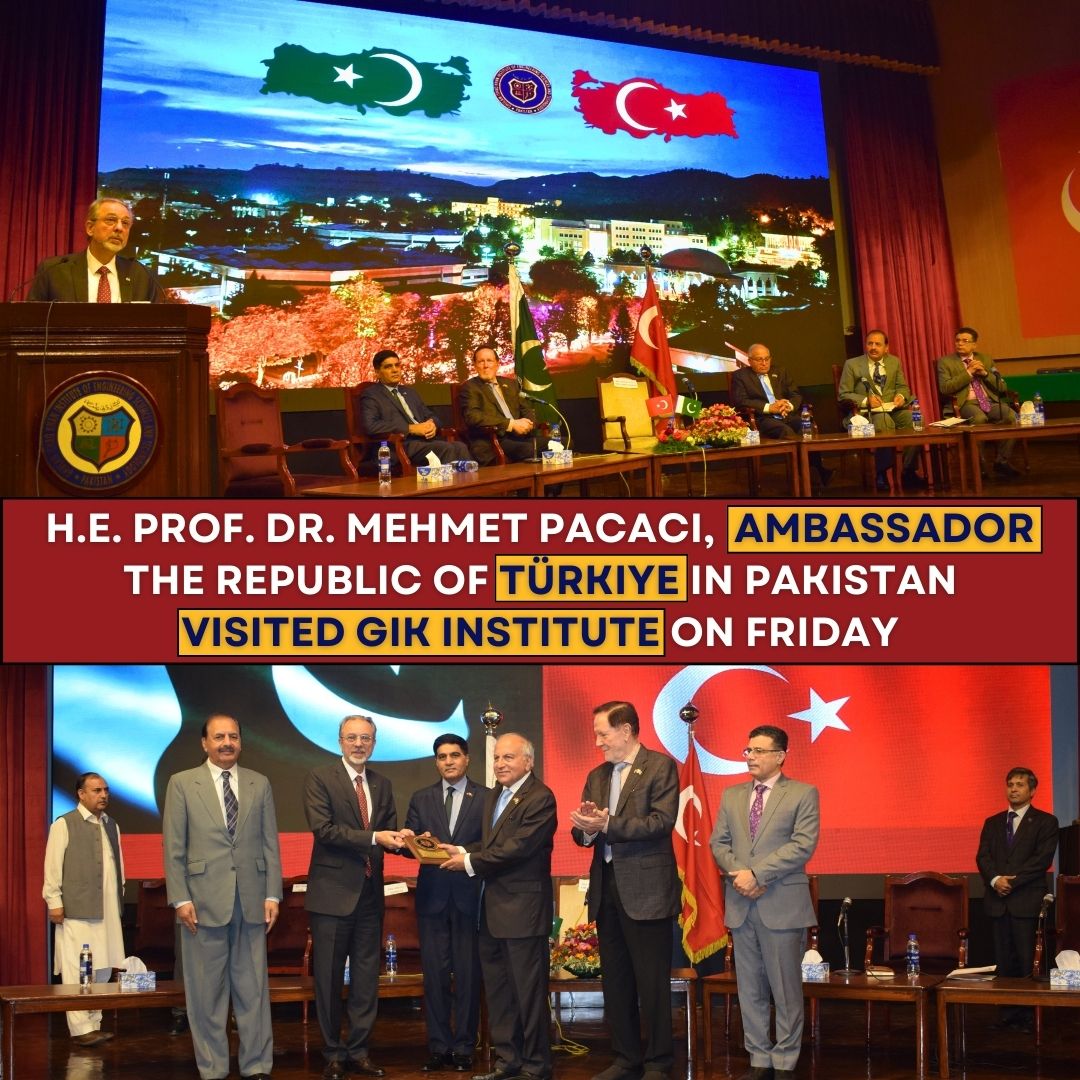
H.E. Prof. Dr. Mehmet Pacaci, Ambassador of the Republic of Türkiye in Pakistan, visited the GIK Institute. Various areas of academic collaboration were explored during discussions with the President, Executive Director, Rector, Pro Rectors, and Deans

The visit of H.E. Prof. Dr. Mehmet Pacaci, Ambassador of the Republic of Türkiye in Pakistan, to Ghulam Ishaq Khan Institute (GIKI) marks a significant step towards strengthening international academic collaborations, directly supporting Sustainable Development Goal 4 (SDG 4): Quality Education. During his discussions with the President, Executive Director, Rector, Pro Rectors, and Deans of GIKI, various areas of academic collaboration were explored, particularly in fields such as engineering, technology, and research.

Such partnerships promote the exchange of knowledge, resources, and best practices between institutions, enhancing the quality and inclusivity of education. This collaboration could lead to joint research projects, faculty exchange programs, and student mobility opportunities, providing GIKI students with access to global educational networks and fostering cross-cultural learning. By promoting international cooperation in higher education, this visit underscores GIKI’s commitment to providing high-quality, diverse, and globally relevant education, which is essential for equipping students with the skills and knowledge needed to address global challenges, in alignment with the objectives of SDG 4.

H.E. Prof. Dr. Mehmet Pacaci, Ambassador the Republic of Türkiye in Pakistan visited GIK Institute on Friday

Rector GIKI, Prof. Dr. Fazal Khalid, SI, visited the Nanotechnology Research Center at UET Lahore and met Vice Chancellor Prof. Dr. Habib Ur Rehman

Rector of Ghulam Ishaq Khan Institute (GIKI), Prof. Dr. Fazal Khalid, SI, visited the Nanotechnology Research Center at UET Lahore, where he met with Vice Chancellor Prof. Dr. Habib Ur Rehman to explore potential avenues for collaboration in the field of nanotechnology. This visit is directly aligned with Sustainable Development Goal 4 (SDG 4): Quality Education, as it highlights the importance of fostering academic partnerships and research in cutting-edge fields such as nanotechnology. Collaborative research and academic exchanges between institutions like GIKI and UET Lahore help enhance the quality of education by promoting innovative research and providing students with access to advanced learning resources and industry-relevant knowledge. By building such partnerships, both institutions are contributing to the development of high-quality, science-driven education that equips students with the skills needed to tackle global challenges. Moreover, strengthening research in emerging technologies like nanotechnology can also drive sustainable innovations that support broader goals such as health, environmental sustainability, and economic growth.

Rector GIKI, Prof. Dr. Fazal Khalid, SI, visited the Nanotechnology Research Center at UET Lahore and met Vice Chancellor Prof. Dr. Habib Ur Rehman

GIKI Electrical Engineering Program granted Level-II OBE Accreditation for (highest) 4 Years after recent PEC visits, evaluations, & approval from EAB

granted Level-II OBE Accreditation for (highest) 4 Years after recent PEC visits, evaluations, & approval from EAB

GIKI, NUTECH, and NED University signed an MoU to promote joint research, student and faculty exchanges, and strengthen inter-provincial harmony with the sponsorship from HEC and PEC

GIKI-NED-NUTECH MoU

GIKI has partnered with US-based company ArchiWiz for collaborative research, innovation, startups, exchange, and bridging industry-academia linkages

Ghulam Ishaq Khan Institute (GIKI) has partnered with the US-based company ArchiWiz to foster collaborative research, innovation, and startup development, while also enhancing exchange opportunities and bridging industry-academia linkages. This collaboration directly supports Sustainable Development Goal 4 (SDG 4): Quality Education, as it seeks to integrate real-world industry challenges with academic research, creating an environment where students gain practical experience alongside their academic learning. By facilitating joint research projects, innovation hubs, and industry-driven startup initiatives, GIKI provides students with hands-on opportunities to develop critical skills that are highly relevant to today’s rapidly evolving job market. Furthermore, the partnership enhances access to cutting-edge technologies and knowledge, improving the quality and inclusivity of education. Through these efforts, GIKI is strengthening its commitment to preparing students for the future, ensuring they have the tools to contribute meaningfully to sustainable development and global innovation.

TCF School GIKI Alumni Campus is providing Quality Education to 150+ children. Rector GIKI, Prof. Dr. Fazal Khalid, One of the TCF GIKI Alumni Campus Leads, Mr. Soban Jalil (GIKI Batch 02) visited the TCF GIKI Alumni Campus

The visit to the TCF School GIKI Alumni Campus by Rector GIKI, Prof. Dr. Fazal Khalid, and Mr. Soban Jalil (GIKI Batch 02), one of the leads of the TCF GIKI Alumni Campus, highlights a strong commitment to Sustainable Development Goal 4 (SDG 4): Quality Education. The campus, which is providing quality education to over 150 children, serves as a vital resource for the local community, offering access to education for children who might otherwise face barriers to learning. Through this initiative, the GIKI alumni network is playing an instrumental role in promoting inclusive and equitable education, ensuring that young learners are given the opportunity to develop critical skills and knowledge. By visiting and supporting this campus, Prof. Dr. Khalid and Mr. Jalil demonstrate GIKI’s ongoing dedication to fostering quality education beyond its own campus, helping to nurture future generations and contribute to the broader goal of ensuring that every child has access to quality education. This aligns directly with SDG 4’s objective of promoting lifelong learning opportunities for all.

TCF School GIKI Alumni Campus is providing Quality Education to 150+ children. Rector GIKI, Prof. Dr. Fazal Khalid, One of the TCF GIKI Alumni Campus Leads, Mr. Soban Jalil (GIKI Batch 02) visited the TCF GIKI Alumni Campus.