Program Self-Assessments

Home > Quality Enhancement Cell > Program Self-Assessments

Self-Assessment Review:

The Self-Assessment Review Process, as outlined by the Quality Assurance Agency (QAA) of the Higher Education Commission (HEC), serves as a critical mechanism for ensuring the excellence and accountability of higher education institutions. This process is designed to facilitate a thorough and reflective evaluation of academic programs and institutional practices, promoting continuous improvement and adherence to established quality standards. By engaging in a comprehensive self-assessment, institutions can identify strengths, address areas for development, and enhance their overall educational offerings. This review not only supports the institution’s commitment to delivering high-quality education but also reinforces its dedication to maintaining transparency and responsiveness in a dynamic academic landscape.

Following are the Programs gone through Self-Assessment Review in 2024-25:

Program Self-Assessment of MS and PhD Chemical Engineering Programs

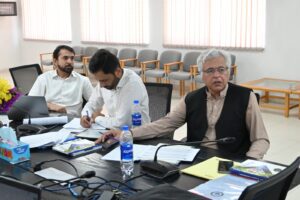
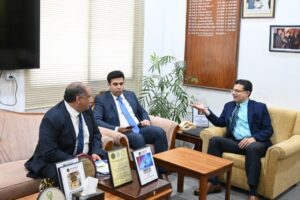
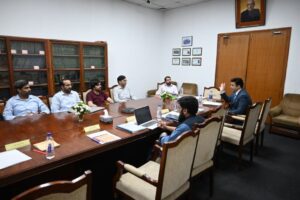
The Assessment Team (AT) meeting for assessment of MS & PhD Chemical Engineering Programs was held on Wednesday, 18th June 2025 at 10:00 AM in Department of Chemical Engineering (DChE) under Quality Enhancement Cell (QEC), chaired by M. Wisal Khalil, Director QEC, GIK Institute of Engineering Sciences & Technology, Topi.

The Program Team (PT) consisted of the following members from DChE:

  • Dr. Hammad Amjad Khan, Associate Professor             –             Member
  • Dr. Shozab Mehdi, Assistant Professor                             –             Member

The Assessment Team (AT) consisted of the following members:

  1. Prof. Dr. Atta Ullah, Professor, Department of Chemical Engineering

           (Convener/External Expert, PIEAS, Islamabad)

  1. Dr. Ahmed Abbass, Associate Professor

           (Inter-Faculty AT Member, FME, GIK Institute)

The Purpose of the meeting was to check the program against the HEC minimum criteria to for its compliance in terms of program structure, resources, policies, and its overall progress. The assessment team, after thorough review of the SAR activity gave their recommendation to the program for improvement. The review meeting was followed by Exit meeting with the Rector, GIK Institute where some key highlights were shared by the assessment team.


Program Self-Assessment of MS and PhD Computer Science Programs

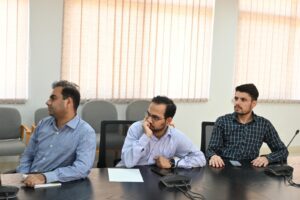
The Assessment Team (AT) meeting for assessment of MS and PhD Computer Science Programs was held on Thursday, 19th June 2025 at 10:00 AM in Faculty of Computer Science & Engineering (FCSE), under Quality Enhancement Cell (QEC), chaired by Mr. Wisal Khalil, Director QEC, GIK Institute of Engineering Sciences & Technology, Topi.

The Program Team (PT) consisted of the following members from FCSE:

  • Dr. Khurram Khan Jadoon, Assistant Professor          – Member
  • Dr. Sarah Khan, Assistant Professor                                – Member

The Assessment Team (AT) consisted of the following members:

  1. Prof. Dr. Laiq Hassan, Professor and Chairman, Department of Computer Systems Engineering,

           (Convener/External Expert, University of Engineering & Technology (UET), Peshawar)

  1. Dr. Husnul Maab, Assistant Professor

           (Inter-Faculty AT Member, FEE, GIK Institute)

The Purpose of the meeting was to check the program against the HEC minimum criteria to for its compliance in terms of program structure, resources, policies, and its overall progress. The assessment team, after thorough review of the SAR activity gave their recommendation to the program for improvement. The review meeting was followed by Exit meeting with the Rector, GIK Institute where some key highlights were shared by the assessment team.

Program Review for Effectiveness and Enhancement (PREE):

As part of its ongoing commitment to academic excellence and quality enhancement, GIK Institute conducted the Self-Assessment of two academic programs through the newly introduced Program Review and Evaluation Exercise (PREE), in accordance with the Quality Assurance Framework (PSG-2023) developed by the Higher Education Commission (HEC). PREE is a systematic and evidence-based mechanism established by HEC’s Quality Assurance Agency (QAA) to ensure that academic programs are aligned with national quality standards and international best practices.

Under this process, program teams at GIK Institute carried out a comprehensive self-evaluation covering all key aspects of program delivery — including program objectives, curriculum design, learning outcomes, faculty qualifications, assessment practices, student support services, and mechanisms for continuous improvement. This internal review was followed by validation through external peer assessment, ensuring objectivity and credibility.

By undertaking this rigorous process through PREE under the PSG-2023 framework, GIK Institute continues to demonstrate its dedication to transparency, accountability, and the delivery of high-quality education that meets the evolving demands of the academic and professional world.

Following are the Programs gone through Self-Assessment Review in 2024-25:

Program Self-Assessment of BS Cyber Security and BS Software Engineering programs on PREE standards

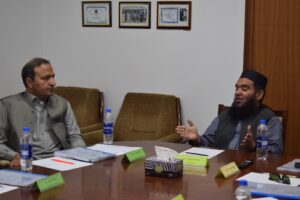
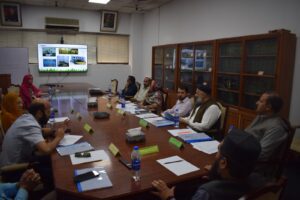
The Assessment Team (AT) meeting for assessment of BS Cyber Security and BS Software Engineering Programs was held on Monday, 30th June 2025 at 10:00 AM in Faculty of Computer Science & Engineering (FCSE), under Quality Enhancement Cell (QEC), chaired by Mr. Wisal Khalil, Director QEC, GIK Institute of Engineering Sciences & Technology, Topi.

This assessment was carried out as part of the Program Review for Effectiveness and Enhancement (PREE), aligned with the newly adopted QA Framework, Program Self-Assessment Guidelines (PSG-2023) issued by the Higher Education Commission (HEC), Pakistan.

The Program Team (PT) consisted of the following members from FCSE:

  • Dr. Rashid Jillani, Assistant Professor                  –             Member
  • Dr. M. Zain Siddiqui, Assistant Professor             –             Member
  • Mr. Said Nabi, Lecturer                                             –             Member
  • Mr. Huzaifa Shah, Lecturer                                      –             Member

The Assessment Team (AT) consisted of the following members:

  1. Prof. Dr. Yasar Ayaz, Professor, Department of Robotics and Artificial Intelligence (SMME)

           (Convener/External Expert, NUST, Islamabad)

  1. Dr. Salman Ahmed, HoD, Department of Computer Science & Artificial Intelligence

           (AT Member, FCSE, GIK Institute)

      3. Dr. Hammad Amjad Khan, Associate Professor

           (Inter-Faculty, AT Member, DChE, GIK Institute)

       4. Dr. Usman Habib, Assistant Professor

            (Inter-Faculty, AT Member, FBS, GIK Institute)

The Purpose of the meeting was to check the program against the HEC minimum criteria to for its compliance in terms of program structure, resources, policies, and its overall progress. The assessment team, after thorough review of the SAR activity gave their recommendation to the program for improvement. The review meeting was followed by Exit meeting with the Rector, GIK Institute where some key highlights were shared by the assessment team.

The Self-Assessment Review Cycle Calendar is available here.

Self-Assessment Review Cycle Process

The self-assessment program review process at GIK Institute of Engineering Sciences and Technology is a critical component of its commitment to maintaining high educational standards and fostering continuous improvement. This process involves a comprehensive internal evaluation where faculty, staff, and stakeholders collaboratively assess the effectiveness of academic programs against predefined criteria. Through detailed analyses of curriculum content, teaching methodologies, student outcomes, and resource utilization, the self-assessment aims to identify strengths, areas for improvement, and potential innovations. The findings from these reviews not only guide strategic planning and decision-making but also ensure that the Institute’s programs remain aligned with industry standards and evolving educational trends, ultimately enhancing the quality of education and student experience.

Implementation of PREE-Based Self-Assessment at GIKI under HEC’s PSG-2023 Framework

The GIK Institute of Engineering Sciences and Technology has adopted the Self-Program Review for Effectiveness and Enhancement (PREE) in alignment with the Quality Assurance Framework (PSG-2023) introduced by the Higher Education Commission (HEC) of Pakistan through its Quality Assurance Agency (QAA).

This new framework aims to strengthen internal quality assurance (IQA) and foster a quality culture across all academic programs at GIKI. It emphasizes evidence-based self-assessment, continuous improvement, and enhanced accountability.

What is PREE?

The Program Review for Effectiveness and Enhancement (PREE) is a structured self-assessment process that enables each academic program to evaluate its own performance against defined PREE Standards. It focuses on key areas such as:

  • Academic quality

  • Student learning outcomes

  • Stakeholder feedback

  • Relevance and responsiveness to market needs

  • Good practices and improvement opportunities

PREE is now a core component of GIKI’s Internal Quality Assurance system, coordinated by the QEC Office.

How the PREE Process Works at GIKI

The self-assessment process follows a standardized, step-by-step approach as outlined below:

Step 1: Initiation

The QEC Office initiates the assessment process through the Rector’s Office at least one semester prior to the end of the assessment cycle. New programs are given up to one academic year for preparation.

Step 2: Formation of Program Team (PT)

Each department forms a Program Team (2–3 faculty members) with expertise relevant to the program.

Step 3: Self-Assessment Report (SAR) Preparation

The Program Team prepares a Self-Assessment Report (SAR) over one semester using QEC provided templates, focusing on performance over the past academic year.

Step 4: Internal Review by QEC

The SAR is submitted to the QEC Office through the concerned Dean. QEC reviews the report to ensure completeness and alignment with PREE Standards.

Step 5: Formation of Assessment Team (AT)

The Rector, in consultation with QEC, forms an Assessment Team (AT) which includes at least one external expert. The AT reviews the SAR, consults with stakeholders, and identifies areas of improvement and best practices.

Step 6: On-Site Assessment

The AT conducts an on-site visit, presents its findings in an exit meeting, and submits a detailed assessment report.

Step 7: Executive Summary

QEC prepares and submits an executive summary of the AT findings to the Rector’s Office.

Step 8: Departmental Implementation Plan

Based on the AT report, the department develops an implementation plan outlining corrective actions, responsibilities, and timelines.

Step 9: Monitoring & Follow-Up

The QEC Office monitors the progress of implementation each semester and ensures timely follow-up on the action plan.

Building a Culture of Continuous Quality

The PREE-based self-assessment process at GIKI ensures that academic programs are continuously reviewed and enhanced, fostering a student-centered, evidence-driven learning environment. It empowers departments to take ownership of quality and integrates assessment deeply into academic planning.

Through this rigorous process, GIKI aligns itself with international best practices, contributing meaningfully to the national and global higher education quality landscape.

For full details of the PSG-2023 QA Framework and PREE Guidelines, visit:
🔗 HEC Quality Assurance Framework (PSG-2023) Program Level IQAEQA Guidance PREE